
For decades, human service systems operated under a fundamental question when someone presented with challenging behaviors or distress: "What is wrong with you?"
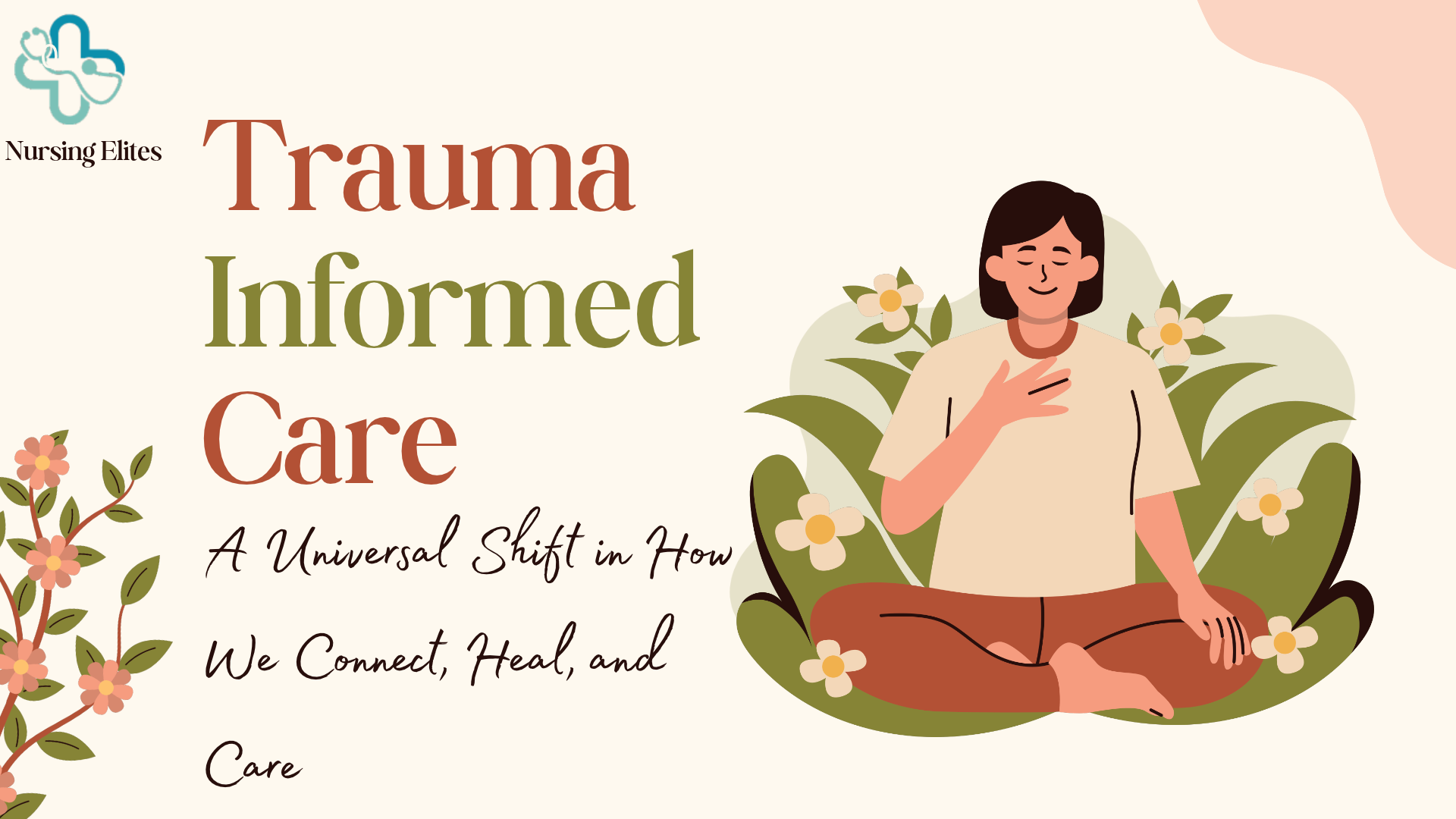
Trauma-Informed Care (TIC) flips that paradigm entirely. Instead of asking what is wrong with a person, TIC asks: "What happened to you?" And as modern pediatric and relational health frameworks remind us, it carries that question one crucial step further: "What is strong with you?"
Trauma-Informed Care is not merely a clinical checklist or a specialized therapy technique. It is a universal framework, a complete organizational culture shift that recognizes how deeply trauma affects human biology, behavior, and relationships.
1. The Core Philosophy: Universal Precaution & Relational Health
To truly understand Trauma-Informed Care, it helps to start with a concept familiar to anyone who has stepped into a medical setting: Universal Precautions.
In clinical settings, healthcare workers put on gloves and take hygienic precautions for every single patient, regardless of whether they know a pathogen is present. We don't wait for a blood test to protect both the patient and ourselves; we apply standard safety protocols universally.
The Institute on Trauma and Trauma-Informed Care (ITTIC) at the University at Buffalo School of Social Work highlights that TIC operates as a universal precaution for psychological trauma. Because trauma is so widespread with roughly 70% of adults in the U.S. having experienced at least one traumatic event we cannot always spot who is carrying psychological wounds. A patient undergoing a routine physical examination or a student sitting in a classroom may look completely calm on the surface while navigating severe internal survival responses.
By applying trauma-informed principles universally to every interaction, policy, and environment, organizations create spaces that naturally prevent re-traumatization and build safety for everyone.
Relational Health at the Center
At its heart, trauma hurts through relationships whether through neglect, abuse, violence, or sudden loss. Therefore, healing must also happen through relationships.
As highlighted by the American Academy of Pediatrics (AAP), Trauma-Informed Care is fundamentally relational healthcare. Healing and recovery occur within the context of Safe, Stable, and Nurturing Relationships (SSNRs). Whether between a nurse and a patient, a supervisor and an employee, or a teacher and a student, safe connections actively quiet the brain's stress response and foster genuine resilience.
2. The Science of Trauma: What Happens in the Brain and Body?
Why do certain clinical procedures, loud environments, or authoritative tones trigger intense reactions in trauma survivors? The answer lies in neurobiology.
When an individual experiences prolonged, severe, or chronic adversity such as Adverse Childhood Experiences (ACEs), domestic stress, or systemic discrimination the brain’s threat detection system becomes highly sensitized. The amygdala ,the brain's alarm system, operates on high alert, while the prefrontal cortex responsible for rational thinking, planning, and emotional regulation becomes harder to access.
When faced with perceived threats, the nervous system activates primal survival responses:
- Fight: Aggression, defensiveness, or verbal confrontation.
- Flight: Avoidance, skipping appointments, or physically leaving the room.
- Freeze: Shutting down, feeling numb, or appearing unresponsive.
- Fawn: Over-agreeing or trying to appease others at the expense of one's own safety or needs.
Moving Beyond Simple ACE Scores
For years, healthcare discussions focused heavily on calculated "ACE Scores" tallying childhood adversities like abuse, neglect, or household dysfunction. While ACE studies proved the strong correlation between early trauma and long-term physical health conditions such as cardiovascular disease, autoimmune disorders, and addiction, expert bodies like the AAP emphasize that an ACE score is not a personal diagnosis or a crystal ball.
An ACE score doesn't capture protective factors, individual resilience, or systemic adversities like racism, community violence, or poverty. Rather than relying solely on clinical screening tools to label people, Trauma-Informed Care encourages treating everyone with universal care, empathy, and dignity.
3. The 4 Rs and 6 Core Principles of Trauma-Informed Care
According to the Substance Abuse and Mental Health Services Administration (SAMHSA), a trauma-informed system is built upon Four Core Assumptions (The 4 Rs):
- Realize: Realizing the widespread prevalence of trauma and understanding that recovery is possible.
- Recognize: Learning to recognize the signs and symptoms of trauma in patients, families, and colleagues.
- Respond: Responding by fully integrating trauma awareness into every policy, procedure, and daily interaction.
- Resist Re-traumatization: Actively identifying and removing institutional practices that trigger panic, powerlessness, or shame.

The 6 Foundational Principles
To operationalize these assumptions, organizations ground their daily work in six key principles:
- Safety: Ensuring both physical environment safety and psychological safety. Lighting, clear signage, accessible exits, and warm, predictable welcomes all contribute to physical safety.
- Trustworthiness & Transparency: Building trust through open communication, clear expectations, and removing hidden rules or sudden surprises.
- Peer Support: Integrating individuals with lived experiences into support networks to validate feelings and foster hope.
- Collaboration & Mutuality: Flattening traditional power dynamics. Healing is a partnership where professionals work with individuals rather than doing things to them.
- Empowerment, Voice & Choice: Prioritizing individual autonomy, offering choices in care, and cultivating self-advocacy.
- Cultural, Historical & Gender Responsiveness: Moving beyond generic care to actively recognize historical, racial, and systemic trauma while offering culturally competent, inclusive care.
4. Re-Traumatization: What It Looks Like and How to Prevent It
Re-traumatization occurs when an interaction, procedure, or environment symbolically or literally replicates a person's past traumatic experiences. This accidentally reactivates their fight, flight, or freeze response.
Most re-traumatization in healthcare and human services is completely unintentional. It happens because systems often prioritize administrative efficiency or strict compliance over human comfort.
Common Institutional Triggers vs. Trauma-Informed Alternatives
Common Trigger / Legacy Practice | Potential Impact on Survivor | Trauma-Informed Micro-Shift |
Demanding personal histories on public intake forms | Feels intrusive, overwhelming, and unsafe. | Explain why information is needed; offer private spaces and the right to skip non-essential questions. |
Abrupt physical examinations without explanation | Replicates feelings of bodily intrusion or loss of control. | Ask for consent before touching: "I'm going to check your heart now. Is it okay if I place the stethoscope here?" |
Rigid rules or punitive cancellation policies | Reenforces feelings of being trapped, judged, or punished. | Provide clear options, flexible scheduling, and compassionate follow-ups when appointments are missed. |
Clinical, cold, or noisy waiting rooms | Heightens nervous system arousal and anxiety. | Design calm, warm physical spaces with clear signage, comfortable seating, and predictable wait times. |
5. TIC Across Sectors: It’s Not Just for Therapists
While Trauma-Informed Care began in behavioral health and clinical social work, its application spans across almost every human-facing field.
Nursing & General Healthcare
In acute care, emergency rooms, and outpatient clinics, clinical procedures can naturally trigger fear. A trauma-informed nurse explains every step before it happens, maintains eye level when speaking to patients, respects physical privacy, and actively involves patients in decisions regarding their care plan.
Leadership, HR, and Workplace Culture
Organizations cannot build trauma-informed environments for clients if they treat their workforce with rigidity. Trauma-informed leadership acknowledges secondary traumatic stress (STS), vicarious trauma, and burnout among staff. It fosters psychological safety where employees feel comfortable communicating limits, asking for help, and co-creating workplace solutions.
Education and Classroom Management
In schools, trauma-informed educators recognize that a student acting out or shutting down is often experiencing emotional overload rather than intentional defiance. By establishing predictable routines, quiet regulation spaces, and restorative practices, teachers help students feel safe enough to learn.
6. How Organizations Implement TIC: The 10 System Domains
Transforming an organization into a trauma-informed system is not an overnight task. Organizations like the Institute on Trauma and Trauma-Informed Care (ITTIC) emphasize that embedded culture change typically takes three to five years of steady effort.
In a landmark systematic review published in The Permanente Journal (PMC10940237), researchers mapped effective trauma-informed transformations across ten key implementation domains established by SAMHSA:
Domain # | Implementation Domain | Key Focus & Objective |
1 | Governance & Leadership | Executive buy-in, strategic commitment, championing organizational change, and steering TIC initiatives. |
2 | Policy & Culture | Reviewing protocols, HR guidelines, and institutional rules through a trauma-informed lens. |
3 | Physical Environment | Enhancing safety, lighting, spatial layout, accessibility, and noise control to create welcoming spaces. |
4 | Engagement & Lived Voice | Integrating patients, students, and clients with lived trauma experience into advisory roles and decision-making. |
5 | Workforce Development | Conducting ongoing staff training, building trauma awareness, and supporting employee wellness to prevent burnout. |
6 | Cross-Sector Collaboration | Partnering with housing, mental health, legal, and community organizations to ensure holistic care transitions. |
7 | Screening, Assessment & Services | Offering evidence-informed, culturally sensitive care focused on individual strengths and resilience. |
8 | Progress Monitoring & Quality Assurance | Establishing operational metrics to ensure fidelity and long-term adherence to trauma-informed practices. |
9 | Evaluation & Continuous Improvement | Systematic measurement of client outcomes, staff experiences, and systemic impact to drive ongoing refinements. |
10 | Financing & Resource Allocation | Securing sustainable funding streams for physical upgrades, workforce development, and operational shifts. |
7. Simple Reflections for Practitioners and Leaders
Whether you are a nurse, a supervisor, a teacher, or a customer service manager, adopting a trauma-informed lens starts with small, daily reflection questions:
- On Environment: "When a person walks into my office or facility, does this space feel welcoming and safe, or cold and intimidating?"
- On Communication: "Am I offering this person genuine choices, or am I presenting demands?"
- On Behavior: "If someone is exhibiting frustration or withdrawal, am I taking it personally, or am I recognizing a potential stress response?"
- On Self-Care: "How am I caring for my own nervous system today so I can show up with presence and empathy for others?"
A Mindset Shift for a More Compassionate World
Trauma-Informed Care is ultimate proof that kindness, empathy, and scientific precision belong together.
By replacing judgment with curiosity, flattening unnecessary hierarchies, and centering human relationships, we do more than just prevent harm. We build environments where individuals, families, and healthcare providers can heal, grow, and thrive together.