
During a practical nursing program
What ATI LPN exams cover
ATI LPN exams are subject checks for practical and vocational nursing students. They follow the LPN scope: stable patients, known procedures, and clear direction about when to call the registered nurse or the provider. They are not ATI RN exams with a different cover.

Practical nursing programs are shorter than registered nursing programs, and the exams inside them are written to that length. You are still responsible for safe medication administration, data collection, and basic care across the lifespan. You are not being tested as the nurse who independently builds the plan for an unstable patient. When an item offers an action that belongs to the RN or the provider, the LPN answer is often to report, to stay with the patient, or to carry out the order you already have.
The publisher is Assessment Technologies Institute. Nursing Elites is not affiliated with ATI, and the ATI LPN catalog is original practice, not a copy of a proctored form.
What “practical nursing” changes in the question
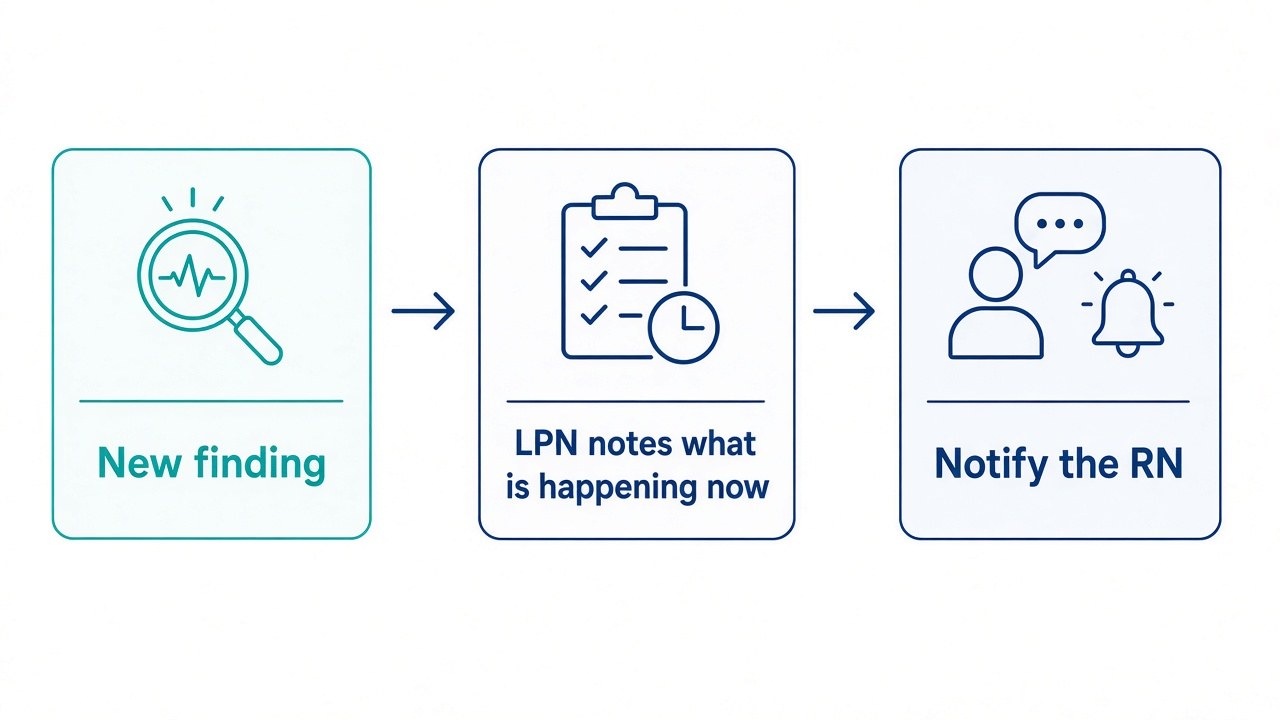
Read the stem for stability. A patient with a new, sudden change is a different item from a patient whose result was expected. Collect the data you are assigned to collect, compare it with the last value, and know which change you do not keep to yourself. Leadership items at this level ask how you organize your assignment and how you speak up, not how you staff a unit.
Gerontology appears because many LPN jobs are with older adults in long-term care as well as in hospitals. A fall risk, a new confusion, a medication that accumulates, and a family asking for an update are ordinary stems. They are not “extra” topics beside the real exam.
The course exams, in the order programs tend to use them
Your syllabus wins if it disagrees with this list. This is the set of subjects the LPN catalog is built to match.
- Fundamentals of nursing, early in the program
- Pharmacology, often beside fundamentals and again later
- Medical-surgical and adult health nursing
- Maternal newborn nursing
- Pediatrics
- Mental health
- Gerontology
- Nutrition
- Community health
- Leadership and management, in the practical-nursing sense
- A capstone or an exit exam near the end
Fundamentals is the exam students try to leave behind. Later pediatrics and adult-health items still ask about hygiene, infection prevention, mobility, and documentation. If those misses are still there, another adult-health quiz will not hide them.
Pharmacology items expect a drug class, a common effect, and a hold-and-report finding. You should be able to say what you check before you give the dose. Brand names change. The check does not.
Do not borrow the RN catalog
The ATI RN guide describes a broader scope and a longer program. An RN medical-surgical item may expect you to manage a deteriorating patient in a way an LPN item would turn into a report. Practicing the wrong scope teaches the wrong “best” action. If you are bridging from LPN to RN later, switch catalogs when the program switches, not before.
The same split exists on the Elsevier side. HESI LPN exams are described on the HESI LPN page. Use that page only if your school assigned HESI, not ATI.
A level is not a grade until the handbook says so
ATI reports proficiency in levels. Your program decides whether a level is a pass, a remediation trigger, or a percentage in the grade book. Read that rule before the exam, including whether a retake replaces the first score. Students lose time studying the rumor from the previous cohort.
Afterward, sort misses into three piles: I did not know the fact, I knew it and chose a later step too soon, or I chose an RN-level action. The third pile is a scope problem. The first pile is a content problem. They need different evenings.
The license exam is still the NCLEX-PN
An ATI exit or capstone is the school’s last look. The NCLEX-PN is the adaptive licensure exam. Passing one does not cause the other. What does transfer is the habit of reading the last line of the stem and the habit of protecting a stable patient before you chase a rare disease.
State boards also ask for a completed program, an application, and a background check. The exam is one piece. The compact-states article is about where a license can travel after you have it, which is a question for after the NCLEX, not for the week of a fundamentals proctor.
How to use a week
Pick the catalog subject that matches the proctored date. Do a short set, write the misses in your own words, and redo only those ideas the next day. Add a timed set two days before the exam. If nutrition or pediatrics is a small course at your school, it can still be a large part of a mixed exit. Do not skip a short course because the textbook was thin.
Nursing Elites does not claim that a practice score will match an ATI level. The sets show whether you can explain the safe action. Your program and the board of nursing make the official decisions.
Related reading
- ATI LPN practice catalogFundamentals, pharmacology, adult health, pediatrics, and the LPN exit sets.
- NCLEX-PN guideThe licensure exam after the program’s ATI checks.
- HESI LPN guideThe other in-school exam track for practical nursing.
- How to become a nurseLPN and RN paths, side by side.
- Nursing assistant programsThe step some students take before a practical nursing program.
One way to split LPN review time
Official sources
ATI is the publisher of the proctored exams. NCSBN publishes the licensure plan the program is pointing toward.
- ATI Testing, home of the LPN and PN assessments.
- 2023 NCLEX-PN Test Plan, the practical-nurse licensure outline.
Five ATI LPN-style practice items
The credited action stays inside practical-nursing practice. These items are original.
-
The LPN asks the client to smile, and the face matches the drawing. The client is also newly confused. What is the appropriate action?
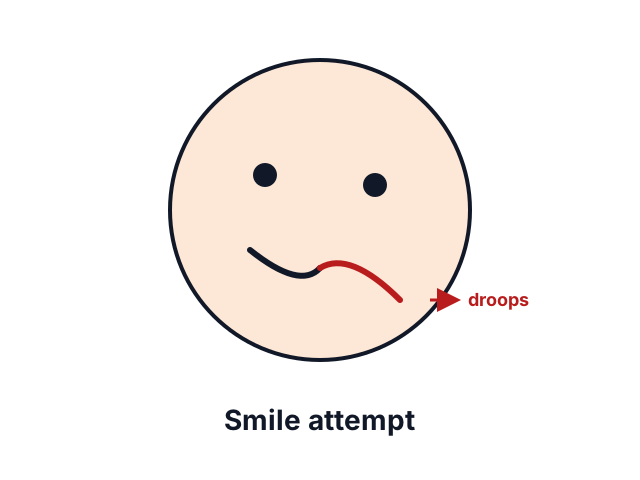
One side of the mouth lifts. The other side hangs down. Paired with new confusion, this is a neurological change. - A. Mention the droop at the end of the shift.
- B. Stay with the client and notify the RN immediately.
- C. Change the diet to pureed food without an order.
- D. Ask a visitor to watch the client and leave the room.
Answer: B.
A new one-sided facial droop plus new confusion can be a stroke. The practical-nursing action is to stay, note what is happening now, and notify the RN at once so the client can be assessed and emergency care can start. Choice A waits through the rest of the shift, which is time the brain does not have. Choice C changes the diet with no order and does not address the new deficit. Choice D leaves a newly confused client with a visitor who cannot assess or call a rapid response. The drawing is there so you see the finding. The decision is still the report, not a diagnosis you write yourself.
-
A client is due for digoxin. The apical pulse is 52, and the order says to hold the dose and call if the pulse is under 60. What should the LPN do?
- A. Give the dose and recheck tomorrow.
- B. Hold the dose and report the heart rate.
- C. Give a double dose.
- D. Ask the client to exercise, then give the dose.
Answer: B.
Digoxin slows and strengthens the heartbeat. The order already contains the safety parameter: hold and call if the apical rate is under 60. A rate of 52 is under that line, so the dose is not given and the rate is reported. Choice A ignores a parameter that was written to prevent giving the drug to a heart that is already slow. Choice C increases the dose, which can push the rate lower. Choice D tries to manufacture a faster pulse so the drug can be given. Exercise does not cancel the parameter, and a client should not be exercised to qualify for a dose that the order says to hold. Count the apical pulse for a full minute, compare it with the number in the order, and then decide.
-
Which client does the LPN see first?
- A. A client who asks for a magazine.
- B. A client who is on the floor beside the bed.
- C. A client who wants the window opened.
- D. A client who is sleeping and is due for a bath later.
Answer: B.
A person on the floor may be injured, may have hit their head, and may not be safe where they are. That client is seen first. Choice A and choice C are comfort requests from clients who are not described as unstable. Choice D is a client who is sleeping and whose bath is not due yet, so there is no immediate harm in waiting. Priority among these four is about who can be hurt by a delay of a few minutes. A magazine, a window, and a later bath can wait. A client on the floor cannot.
-
A toddler is due for an oral liquid medication. Which action is appropriate?
- A. Mix the dose into a full bottle of milk.
- B. Measure the dose with an oral syringe and give it slowly.
- C. Use a household teaspoon from the cafeteria.
- D. Call the medicine candy so the child will swallow it.
Answer: B.
An oral syringe is marked in milliliters, so the dose the order names is the dose the child receives, and giving it slowly reduces choking. Choice A hides the drug in a full bottle. If the child stops halfway, you do not know how much was taken, and you cannot give the rest of the milk later without giving an unknown extra dose. Choice C uses a household spoon, which is not a standard 5 mL teaspoon and varies from drawer to drawer. Choice D teaches the child that medicine is candy, which is how later unsupervised doses happen. If the drug may be mixed, mix it in a small amount the child will finish, and say that it is medicine.
-
A client with heart failure is served bacon and canned soup. Which teaching is best?
- A. Those foods are low in sodium.
- B. Those foods are often high in sodium and can worsen fluid retention.
- C. Soup should replace the medications.
- D. Bacon is required for protein.
Answer: B.
In heart failure the heart is not moving fluid forward well, and extra sodium makes the body hold more water. Bacon and canned soup are both typically high in sodium, so the useful teaching is that these foods can worsen the fluid retention the medications are trying to limit. Choice A is the opposite of the usual sodium content of those foods. Choice C tells the client to stop treatment and eat soup instead, which is not a diet teaching and is unsafe. Choice D invents a protein requirement for bacon. Other proteins exist that are not cured and salted. Teaching is specific: name the foods on the tray, name the problem they worsen, and do not cancel the medication plan.
Questions students ask
What is an ATI LPN exam?
ATI LPN exams are assessments used in practical or vocational nursing programs. They check course content such as fundamentals, pharmacology, medical-surgical nursing, maternal newborn, pediatrics, and mental health at the practical-nursing level.
Is ATI LPN the same product as ATI RN?
No. Both come from ATI, but the items and expectations follow the practical nursing scope, not the registered nursing scope. A student should practice on the track that matches the program.
Does an ATI LPN score replace the NCLEX-PN?
No. The NCLEX-PN is the licensure exam. ATI results may guide remediation inside the program. Only the state board of nursing can authorize a license after a passing NCLEX-PN result.
Which subjects should an LPN student practice first?
Start with the course you are in now. Fundamentals and pharmacology support almost every later exam. Use your syllabus, not a generic ranking, to choose the next set.